

To open it up, just drill out the two rivets on each side. When dismantled, it looks like this:
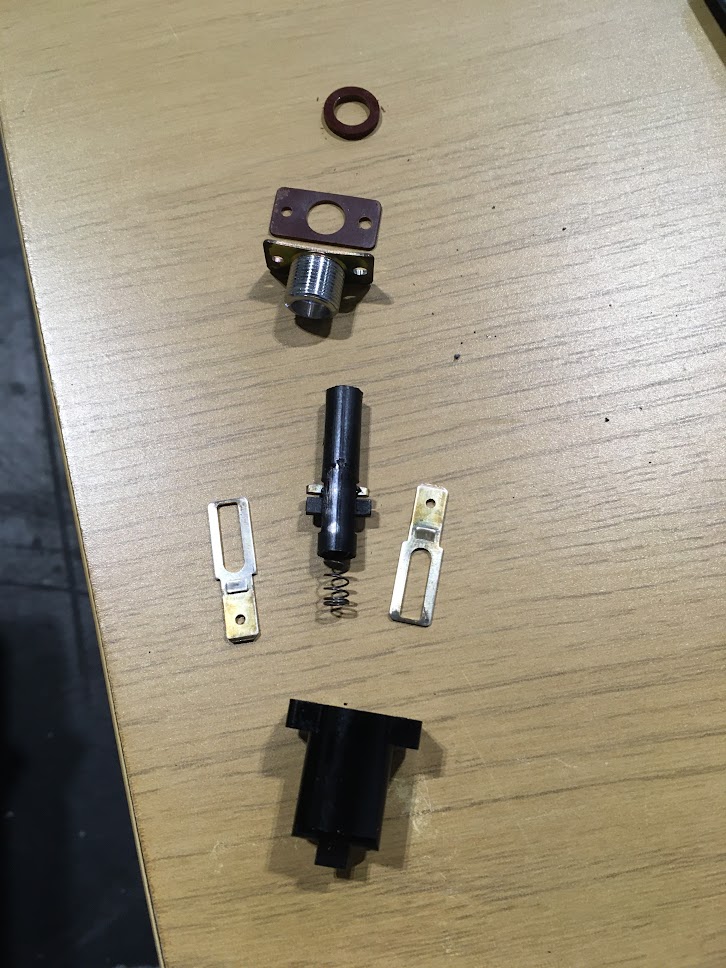
There is a metal bar running across the central plastic pin; each end of the bar slides up and down in the hole in each of the metal plates. The spring pushes the plastic pin up, so at the top of the travel the metal bar should contact the ends of the holes in the metal plates, thus connecting them. The bottom ends of the plates protrude out of the switch body, thus forming spade connectors to connect to the wiring loom.
According to Matt, who has fixed many, these normally just need a clean-up of the metal surfaces to remove corrosion. That didn't work on mine. It seems that, when the plastic pin reached the end of its travel, the bar was only touching one of the plates. Matt's fix was to make the bar a slightly loose fit in the pin, so it could rock slightly, ensuring good connection with both the metal plates.
To re-assemble, I used a couple of M2.5 bolts and nyloc nuts instead of the rivets there originally - I couldn't find a rivet the right size, and besides, there's a good chance that pulling the rivet closed would just crack the housing (Matt was visibly twitching at the very thought of me trying it!).